
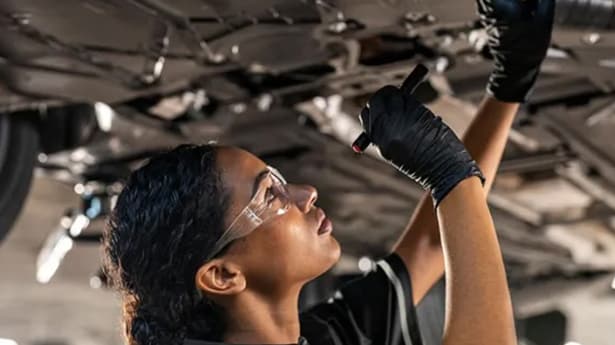
Summer weather in Central Kentucky introduces specific thermal challenges for high-performance braking systems. Daily commuting along busy corridors like Man o' War Boulevard or navigating stop-and-go conditions across Lexington subjects brake pads and rotors to sustained heat cycles. Every deceleration converts kinetic energy into intense friction heat. When ambient air temperatures remain elevated throughout July and August, the braking system operates at a significantly higher baseline temperature, leaving less headroom for heat dissipation.
Inspecting your brakes after summer driving is essential because high ambient temperatures, heavy traffic, and extended highway trips accelerate wear on friction materials, lower hydraulic fluid boiling thresholds, and harden rubber seals. Catching thermal glazing, rotor surface variation, or fluid moisture absorption early prevents severe component damage and ensures your vehicle maintains original factory stopping distances.
Over time, this continuous thermal load causes microscopic changes in the friction compound of your brake pads and alters the surface metallurgy of the brake rotors. Routine multi-point checks help identify subtle changes in pedal feel, pad material depth, and hydraulic integrity before minor thermal wear transforms into an expensive repair. To keep your luxury vehicle performing to manufacturer standards, our team at James Motor Company Mercedes-Benz provides thorough system evaluations. Drivers can easily reach our service facility located at 2440 Richmond Rd, Lexington, KY 40502 or speak directly with an advisor by giving us a quick call today.
How Does Summer Heat Accelerate Wear on Brake Pads and Rotors?
Summer heat elevates the baseline operating temperature of brake components, drastically reducing the system's ability to shed friction-generated thermal energy during deceleration. Under standard operating conditions, kinetic energy is converted into friction heat, which rapidly dissipates into the surrounding air through the ventilated design of the brake rotors. However, when ambient temperatures surge, the temperature gradient between the brake assembly and the surrounding air decreases, slowing down the cooling rate between stops.
This prolonged exposure to elevated temperatures alters how friction compounds interact with metal rotors. High-performance braking systems equipped with ceramic friction compounds perform exceptionally well across wide temperature ranges, yet sustained thermal stress can eventually crystallize surface resins. When owners bring their vehicles in after extended summer highway trips, they most often ask whether a high-pitched squeal when stopping is permanent pad damage or reversible surface glazing. This noise is frequently caused by thermal resin breakdown.
Furthermore, severe heat increases the rate at which pad material transfers onto the face of the rotor. Uneven pad material deposition creates micro-variations in rotor thickness, known as thickness variation, which leads to lateral runout. Over time, this results in noticeable steering wheel vibration or pedal pulsation under moderate braking pressure. Manufacturer guidelines established by Mercedes-Benz USA recommend comprehensive brake system evaluations at least once every 10,000 miles or once a year, with shorter intervals advisable when driving in severe thermal environments or frequent stop-and-go traffic. Regular care ensures advanced driver safety innovations like Active Brake Assist and PRE-SAFE® technology function with exact precision.
What Are the Physical Signs of Summer Brake Pad Glazing?
Physical signs of summer brake pad glazing include a mirror-like, shiny finish on the friction material, a hardened pad texture, high-pitched squealing under moderate pedal pressure, and noticeably extended stopping distances. Glazing occurs when friction surface temperatures exceed 500 degrees Fahrenheit during sustained heavy braking or continuous stop-and-go driving in high ambient heat.
At these elevated temperatures, the organic binder resins within the brake pad friction compound melt, migrate to the surface, and vitrify into a smooth, glassy layer. This hardened barrier dramatically reduces the coefficient of friction between the pad face and the rotor surface. Consequently, drivers must exert significantly greater pedal effort to achieve normal deceleration forces.
During a visual and physical inspection, factory-trained technicians look for several distinct indicators of thermal glazing:
- Mirror-Like Surface Finish: A smooth, reflective sheen on the brake pad friction face rather than a matte, textured finish.
- Hardened Friction Compound: Material that resists normal friction bed-in, leading to reduced stopping grip.
- Edge Crystallization: Flaking or crumbling along the outer edges of the friction material where thermal stress concentrates.
- Audible High-Pitched Squeal: Squealing caused by the hardened pad surface vibrating against the smooth rotor surface during light to moderate engagement.
- Reduced Friction Thickness: Wear approaching or reaching the minimum safe thickness threshold of 3 mm, requiring immediate pad replacement.
Ignoring glazed brake pads can lead to localized hot spots on the cast-iron brake rotors. These hot spots create structural alterations in the metal, leading to permanent rotor warping and accelerated wear on surrounding caliper hardware.
Why Does Hot Weather Degradation Make Brake Fluid Inspection Critical?
Hot weather brake fluid inspection is critical because brake fluid is hygroscopic, meaning it continuously absorbs atmospheric moisture over time, which significantly depresses its boiling point during severe thermal exposure. Under heavy braking in high summer heat, contaminated brake fluid can reach its lowered boiling threshold, creating vapor lock within the hydraulic lines.
Because vapor bubbles are compressible, pressing the brake pedal simply condenses the air pockets rather than transmitting hydraulic pressure directly to the brake calipers. This condition manifests as a soft, spongy, or low brake pedal feel, and in extreme scenarios, can cause temporary brake fade. High-grade DOT 4 brake fluid is formulated with a elevated dry boiling point to withstand intense thermal stress, but water absorption steadily degrades its wet boiling point over months of driving.
The humid summer climate across Kentucky accelerates moisture absorption through microscopic pores in flexible rubber brake hoses and fluid reservoir seals. Commuters making the daily drive from Nicholasville into urban centers often experience elevated brake temperatures due to frequent speed changes and traffic stops, making fluid checks essential after summer concludes. Testing fluid copper content and moisture volume verifies whether the hydraulic system can deliver immediate stopping response. To ensure your hydraulic system remains fully protected, you can easily use our online service scheduler to book a professional fluid inspection.
Which Mechanical Components and Emergency Brake Cables Suffer Most from Summer Stress?
Caliper slider pins, rubber dust boots, flexible hydraulic lines, and emergency brake cables suffer the highest stress from summer driving due to thermal grease breakdown, rubber hardening, and moisture-induced internal binding. While pads and rotors receive the most attention, the underlying mechanical and hydraulic infrastructure is equally vulnerable to prolonged thermal exposure.
High under-car temperatures dry out specialized silicone lubricants on caliper guide pins. When slider lubrication breaks down, calipers cannot float freely, causing uneven inner-to-outer pad wear and dragging pads that remain in constant contact with the rotor. Simultaneously, intense thermal radiation hardens flexible rubber caliper dust boots and axle brake hoses, causing them to crack, split, or lose elasticity over time. Damaged boots allow ambient humidity and road debris to enter the caliper piston bore, leading to internal corrosion or stuck pistons.
Emergency brake systems—also referred to as parking brakes—suffer during summer due to thermal expansion cycles and humidity exposure. High ambient moisture combined with heat can cause internal steel cables within protective sheaths to bind, stretch, or corrode. A sticking emergency brake cable may prevent the rear brake shoes or pad mechanisms from fully retracting, generating hidden drag and extreme heat build-up while driving. Replacing damaged hardware with genuine original equipment parts from our specialized parts department ensures exact tolerances, correct thermal resistance, and long-term durability.
Frequently Asked Questions About Post-Summer Mercedes-Benz Brake Maintenance
Q: How does a technician determine if glazed brake pads can be saved?
A technician measures the remaining friction thickness and inspects the depth of the thermal damage. If the friction layer exceeds the minimum safety limit of 3 mm and the glazing is limited to the uppermost layer, the pads can sometimes be lightly sanded and bedded-in again. However, if heat has altered the structural integrity of the binder compound throughout the pad, replacement is necessary to restore proper friction performance.
Q: Will the brake wear indicator light warn me about fluid moisture or thermal glazing?
No, the electronic brake pad wear sensor only alerts you when the physical friction material wears down to a critical thickness threshold and makes contact with the sensor pin. It does not measure brake fluid moisture content, chemical breakdown, boiling point degradation, or thermal glazing on the pad face. Comprehensive physical inspections and fluid testing are required to detect these issues.
Q: Is a complete brake check included during routine Mercedes-Benz Service A or Service B?
Yes, both Service A and Service B maintenance schedules include a thorough visual and dimensional inspection of the entire braking system. Technicians measure pad thickness, evaluate rotor surface condition, inspect caliper dust boots, and check brake fluid levels. However, if you experience pedal pulsation, unusual noises, or soft pedal response after severe summer driving, scheduling an immediate targeted inspection is recommended. To learn more about our facility standards and certified team, visit our about us overview page.
Q: Why do my brakes squeal only in the morning after hot summer weather?
Morning squealing often occurs when thin layers of surface oxidation form on cast-iron rotors overnight due to humidity, combined with minor surface glazing on the brake pads. As you apply the brakes during the first few stops, the pads sweep the light oxidation off the rotor face, and normal operating friction temperature is restored, which usually quiets the squeal. C ontinuous squealing throughout the day indicates permanent pad wear or thermal glazing.
Q: How long does a post-summer brake inspection take at the dealership?
A comprehensive brake inspection typically takes between 45 to 60 minutes. During this process, a certified technician removes all four wheels, measures pad friction depth at multiple points, checks rotor thickness and lateral runout using precision gauges, inspects rubber lines and caliper sliders, and tests hydraulic fluid moisture levels to provide an accurate assessment.
 AdChoices