
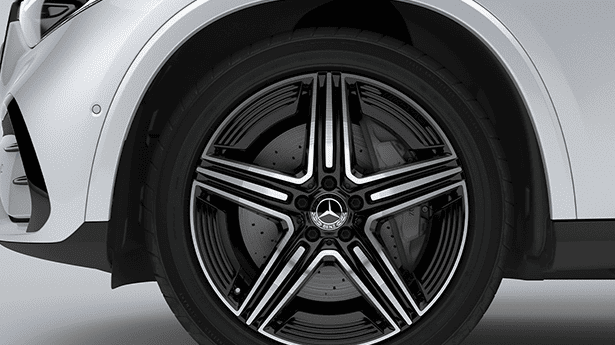
Mercedes-Benz recommends transitioning to dedicated winter tires whenever ambient temperatures consistently drop below 45°F (7°C). Standard all-season rubber compounds harden in colder weather and lose elasticity, whereas winter tires utilize pliable silica-enriched compounds, specialized tread siping, and deep lateral grooves to maintain elasticity, optimize mechanical grip, and significantly shorten stopping distances on cold, wet, snowy, or icy road surfaces.
Understanding cold-weather tire physics is essential for maintaining vehicle safety and performance. Rubber engineering dictates how a tire interacts with asphalt. High-performance summer tires and standard all-season tires rely on tread compounds designed to operate efficiently in mild to warm ambient conditions. Once temperatures drop below the 45°F threshold, the tread material hardens, drastically reducing micro-level grip even on clear, dry pavement. Winter tires, marked with the Three-Peak Mountain Snowflake (3PMSF) symbol, remain soft and pliable in sub-freezing conditions, ensuring the tread conforms to road surface irregularities.
Mechanical grip directly influences advanced chassis and driver assistance systems. Features such as Active Brake Assist, PRE-SAFE®, and 4MATIC® all-wheel drive rely on the frictional coefficient between the tire tread and the road surface. While 4MATIC® intelligently distributes engine torque across all four wheels and works alongside ESP® (Electronic Stability Program) and 4ETS (Electronic Traction System) to prevent wheel spin during acceleration, all-wheel drive cannot generate traction where none exists. Installing four approved winter tires provides the baseline mechanical grip these electronic stability systems require to modulate braking and steering inputs effectively.
Seasonal vehicle care requires monitoring local climate changes and scheduling tire changeovers before sustained cold arrives. Commuters navigating the rolling terrain and unpredictable morning frost across Lexington rely on proper seasonal tire selection to preserve vehicle control and occupant protection. If you need assistance selecting factory-approved cold-weather tire options, visit our Lexington service location at 2440 Richmond Rd or give our service advisors a call at (859) 268-1150.
How Do All-Weather Tires Compare to Traditional All-Season and Winter Tires?
All-weather tires feature pliable rubber compounds bearing the 3PMSF certification that deliver stronger cold-weather and light-snow traction than conventional Mud and Snow (M+S) rated all-season tires, though they experience slightly accelerated tread wear in high summer heat and cannot match dedicated winter tires on pure ice.
Evaluating tire classifications requires examining tread design, compound elasticity, and temperature operating windows:
- Traditional All-Season Tires: Engineered as a year-round option for moderate climates, all-seasons utilize firm rubber compounds that maximize tread longevity, yielding mileage warranties often reaching 50,000 to 70,000 miles. However, their compound hardens below 45°F, and their rigid tread blocks lack aggressive siping for ice grip.
- All-Weather Tires: Built as a hybrid alternative, all-weather tires use an asymmetric tread pattern and a softer rubber compound that remains flexible in freezing conditions. They carry the 3PMSF rating, signifying proven snow traction, but their softer tread can wear down faster under sustained high summer highway speeds compared to traditional all-seasons.
- Dedicated Winter Tires: Purpose-built exclusively for cold weather, winter tires feature high silica concentrations, deep tread depth, and thousands of biting edges (micro-siping). They deliver unmatched traction on packed snow and glare ice, but must be removed when spring temperatures average above 45°F to prevent rapid tread wear.
Driver concerns frequently center on whether all-weather tires wear out faster in summer than traditional all-season tires. Because all-weather tread compounds are formulated to stay flexible in freezing weather, driving them through hot summer asphalt temperatures can accelerate rubber breakdown, slightly shortening overall tread life compared to a dedicated summer or traditional all-season tire.
Another common question is whether all-weather tires can handle deep snow as effectively as dedicated winter tires. While all-weather tires perform admirably in slush and moderate snow accumulation, they lack the extreme tread depth, specialized slush-evacuation channels, and dense siping of a dedicated winter tire. For luxury sedans and crossover SUVs, such as the GLC 300 4MATIC Coupe fitted with staggered 19-inch wheels, dedicated winter tires offer superior directional stability. Our service team can assist with selecting factory-recommended tire specifications through our Mercedes-Benz parts department.
How Much Shorter Is Stopping Distance with Dedicated Winter Tires on Snow and Ice?
Dedicated winter tires can reduce stopping distances on packed snow and glare ice by 25 to 40 percent compared to standard all-season tires, which translates to a saving of up to two full vehicle lengths at moderate commuting speeds.
Braking performance on frozen road surfaces depends on tread pliable friction rather than vehicle weight or horsepower. Independent cold-weather testing demonstrates that at speeds of 25 mph on packed snow, a vehicle fitted with dedicated winter tires stops in approximately 56 feet, whereas the same vehicle on all-season tires requires over 81 feet to come to a complete halt. On glare ice at 12 mph, winter tires shorten braking distance by over 16 feet compared to conventional all-season rubber.
At what temperature do all-season tires start losing traction? Rubber hardens as ambient temperatures drop below 45°F. On dry or damp cold pavement near freezing, an all-season tire’s hardened compound skids across the road surface rather than gripping micro-textures in the asphalt, extending stopping distance even when snow is not present.
Vehicle drivetrain technology cannot overcome a lack of physical tire traction:
- All-Wheel Drive Capabilities: Systems like 4MATIC® distribute engine torque across axles to assist with forward acceleration on slippery slopes, but all-wheel drive does not shorten vehicle braking distances.
- Braking and Friction: Every vehicle—whether front-wheel drive, rear-wheel drive, or all-wheel drive—uses four-wheel braking. Stopping ability is strictly limited by the coefficient of friction between the tire tread and the ice or snow.
- Cornering Stability: Specialized winter siping bites into icy surfaces, allowing driver assist features like Active Brake Assist to maintain directional control during emergency evasive maneuvers.
For daily commuters traveling along US-27 from Nicholasville where overnight freezes frequently leave unexpected patches of glare ice at traffic intersections, dedicated winter tires provide the necessary stopping power to avoid rear-end collisions.
Is a Dedicated Winter Tire Package Cost-Effective and Can You Use Smaller Wheels?
Purchasing a dedicated winter tire and wheel package is cost-effective because it eliminates twice-yearly tire dismounting labor, preserves expensive original equipment alloy wheels from road salt degradation, and allows wheel downsizing for enhanced winter traction and impact absorption.
A dedicated winter package consists of four winter tires mounted on a separate set of factory-approved wheels. Over an ownership period of three to four years, the initial investment in a secondary wheel set is offset by several financial and operational advantages:
- Labor Savings: Swapping complete wheel assemblies seasonally requires significantly less shop labor time and expense than dismounting, remounting, and rebalancing loose tires on original rims twice a year.
- Wheel Protection: Winter driving exposes alloy rims to corrosive road de-icers, salt slurry, and concealed curb hazards buried beneath snow drifts. Utilizing a secondary winter wheel set keeps primary high-finish factory wheels pristine.
- Tire Bead Preservation: Repeatedly demounting rubber tires stretches and stresses the tire bead, increasing the risk of bead damage or slow rim leaks over time.
Drivers also frequently inquire whether smaller wheel diameters can be used for a Mercedes-Benz winter package. Downsizing wheel diameter—commonly known as a "Minus One" conversion—is an industry-standard practice for winter fitments. For instance, if your vehicle wears 19-inch wheels with low-profile tires for summer driving, switching to an approved 18-inch winter wheel paired with a taller tire sidewall maintains the exact overall rolling circumference.
Maintaining overall tire rolling diameter ensures speedometer and odometer readings remain accurate while keeping electronic transmission and stability sensors calibrated properly. The additional sidewall height provides extra rubber cushioning to absorb hard impacts from winter potholes, while a slightly narrower tire tread profile exerts higher pressure per square inch on the road surface, cutting through slush to reach solid pavement. When downsizing, technicians verify brake caliper clearance, wheel offset, and load index ratings to ensure safety on models such as the GLE 350 4MATIC SUV or AMG variants.
What Should You Know About Mercedes-Benz MOExtended Run-Flat Winter Tires?
Mercedes-Benz Original Extended (MOExtended) winter tires feature reinforced sidewalls engineered to support vehicle weight and permit driving up to 50 miles at speeds up to 50 mph following a complete loss of inflation pressure.
Factory tire engineering standards require strict adherence to performance metrics before earning an MO (Mercedes-Benz Original) or MOExtended designation on the sidewall. These specifications evaluate ride comfort, cabin noise insulation, high-speed handling, and integration with active driver assistance technologies. MOExtended run-flat winter tires combine cold-weather rubber compounds with structural sidewall inserts, offering distinct owner advantages:
- Zero-Pressure Mobility: In the event of a winter puncture or valve failure in freezing weather, drivers can continue traveling safely to a secure location or service facility without standing on a cold shoulder to change a tire.
- Maintained Vehicle Control: Reinforced sidewalls prevent the tire from collapsing or detaching from the rim bead during sudden pressure loss, preserving steering control and ESP® stability intervention.
- Trunk Space Efficiency: Because run-flat technology provides emergency mobility, vehicles do not require a spare tire, maximizing rear cargo volume.
Vehicle owners should be aware of specific operational and service guidelines regarding MOExtended run-flat tires. Following a loss of tire pressure, drivers must observe the maximum speed limit of 50 mph and limit total distance traveled to 50 miles under normal load conditions.
From a maintenance standpoint, Mercedes-Benz guidelines strongly recommend replacing rather than repairing punctured MOExtended tires. Operating a run-flat tire without air pressure subjects the internal sidewall reinforcement structure to severe flex stress and thermal loading. Replacing the tire restores full structural integrity and maintains original safety standards. For immediate assistance during unexpected tire emergencies, drivers can access Mercedes-Benz Roadside Assistance: 1-800-367-6372, or learn more about about our dealership team and our commitment to owner support.
Common Questions About Mercedes-Benz Winter Tire Maintenance
Q: How many winter seasons do dedicated winter tires typically last?
On average, dedicated winter tires provide reliable performance for three to four seasons before tread wear necessitates replacement. Mercedes-Benz owner-manual guidance recommends replacing tires no later than six years after manufacture regardless of remaining tread wear. Furthermore, winter tires lose their specialized ice and snow traction capabilities once tread depth wears below 4.8 mm (roughly 6/32 inch), making routine inspection during winter service appointments vital for maintaining vehicle safety.
Q: How do cold ambient temperatures affect tire pressure monitoring?
Tire pressure decreases by approximately 1 psi for every 10°F drop in ambient outdoor temperature. When cold winter air arrives, the tire pressure monitoring system (TPMS) may trigger an alert on the digital instrument cluster. Inflation levels must always be checked when tires are cold—meaning the vehicle has been parked out of direct sunlight for at least three hours—and adjusted strictly to the values listed on the driver door pillar placard or fuel filler flap. You can easily schedule an inflation check using our online service scheduler.
Q: Can winter tires be installed on only the drive wheels of a 4MATIC vehicle?
Winter tires must always be installed as a complete set of four on all Mercedes-Benz vehicles. Installing winter tires on only two wheels creates a severe traction imbalance between the front and rear axles. On 4MATIC® all-wheel drive models, mismatched grip levels disrupt torque distribution, impair ESP® stability intervention, and can cause unpredictable oversteer or understeer during emergency stopping maneuvers on snow and ice.
Q: What is the minimum tread depth required for effective winter tire performance?
While legal tread wear indicators mark minimum depth at 1.6 mm (2/32 inch), winter tires require a minimum tread depth of 4.8 mm (about 6/32 inch) to channel slush and snow effectively. Below this depth, the micro-siping density is diminished, drastically reducing grip on glare ice. Service technicians measure tread depth across inner, center, and outer tread grooves during multi-point inspections to confirm winter tires remain safe for continued cold-weather use.
Q: How should winter tires be stored during the summer months?
Off-season tire storage requires washing tire and wheel assemblies to remove brake dust and road salt before storing them in a cool, dry, dark environment. Keep tires away from direct sunlight, ambient moisture, and ozone-generating electric motors. Storing mounted wheel sets vertically or stacking them flat on clean wooden pallets protects the rubber compound from premature oxidation and cracking throughout the warm summer season.
Schedule Professional Mercedes-Benz Tire Service
Selecting and maintaining the proper tires protects your luxury vehicle investment and preserves essential driver safety on cold road surfaces. Our factory-trained service technicians perform tire inspections, precise four-wheel alignments, wheel balancing, and seasonal changeovers using specialized equipment designed specifically for Mercedes-Benz vehicles. Whether you require a new set of MOExtended winter tires, a downsized cold-weather wheel package, or routine pressure maintenance, our team provides expert care tailored to your driving habits. Visit our Lexington dealership address, call our advisors at (859) 268-1150, or browse our current tire service specials to prepare your vehicle for winter.
Prices and MSRP referenced in this article are estimates for informational purposes only and do not constitute an offer to sell. See dealer for complete details. Fuel economy estimates shown may differ from official EPA ratings and should not be relied upon as a guarantee of actual vehicle performance.


