
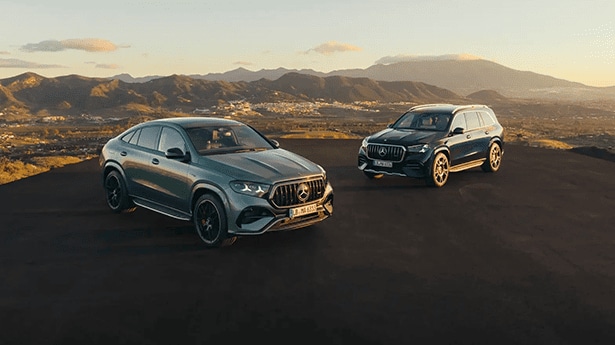
A standard Mercedes-Benz focuses on exceptional ride comfort, refined luxury, and state-of-the-art technology, whereas a Mercedes-AMG is a dedicated high-performance vehicle engineered for athletic power, track-tested dynamics, and aggressive styling. While Mercedes-Benz models deliver smooth daily driving with sophisticated efficiency, Mercedes-AMG models introduce handcrafted engines, sport-tuned suspensions, dynamic exhausts, and motorsport-inspired design language.
The story behind this distinction dates back to 1967, when former Mercedes engineers Hans Werner Aufrecht and Erhard Melcher founded AMG as an independent performance engineering firm in Großaspach, Germany. The letters stand for Aufrecht, Melcher, and Großaspach. What began as a specialized racing engine builder eventually became the official high-performance division of Mercedes-Benz, operating out of its headquarters in Affalterbach.
At the core of the AMG division is the celebrated One Man, One Engine philosophy. For higher-tier performance models, a single master engine technician hand-assembles the powerplant from start to finish at the Affalterbach facility, placing an engraved signature plaque onto the engine cover upon completion. In contrast, standard Mercedes-Benz engines are produced using automated assembly processes that prioritize smooth power delivery and fuel efficiency for everyday transportation.
Beyond the engine bay, the structural identity of an AMG vehicle is fundamentally altered. AMG engineers modify chassis rigidity, recalibrate steering ratios, fit high-performance braking systems, and re-engineer all-wheel-drive torque distribution to handle massive power outputs. Whether navigating city thoroughfares or accelerating along highway corridors, driving an AMG model offers an intense connection between driver and vehicle that contrasts with the tranquil isolation of a core Mercedes-Benz sedan or SUV.
To experience these performance distinctions in person, stop by our Lexington showroom address or give our client advisors a quick call to arrange a consultation.
How Does AMG Engineering and AMG RIDE CONTROL Suspension Differ from Standard Mercedes Hardware?
Standard Mercedes-Benz vehicles utilize comfort-oriented suspensions and smooth transmissions designed to absorb road imperfections, whereas AMG variants employ hardware such as AMG RIDE CONTROL adaptive damping and multi-clutch AMG SPEEDSHIFT transmissions engineered for precise high-speed control. AMG models feature stiffer spring rates, reinforced chassis bracing, and specialized drive programs that drastically minimize body roll during spirited cornering.
The technical variance between suspension architectures illustrates the differing mechanical objectives of both lines:
- Standard Mercedes-Benz models utilize AGILITY CONTROL suspension with selective damping or available AIRMATIC air suspension, balancing pillow-soft bump absorption with composed handling.
- AMG variants feature AMG RIDE CONTROL or AMG RIDE CONTROL+ air suspension with continuous electronic adaptive damping, allowing drivers to instantly switch between refined highway cruising and taut circuit handling.
- AMG suspensions incorporate dynamic engine mounts, widened track widths, and stiffer rear-axle subframes to keep wide, sticky performance tires firmly glued to the pavement.
Transmissions and drive systems are similarly recalibrated for performance applications. While standard vehicles employ a smooth 9G-TRONIC automatic transmission, AMG vehicles adopt specialized gearboxes such as the AMG SPEEDSHIFT TCT 9-speed or AMG SPEEDSHIFT MCT 9-speed transmission with wet start-off clutches, delivering instantaneous downshifts and rapid acceleration response.
This hardware difference becomes immediately obvious when navigating the undulating terrain and rolling curves surrounding Lexington. Standard models sweep across uneven pavement with whisper-quiet composure, while an AMG vehicle responds with immediate steering precision and firm, flat cornering posture. Buyers interested in exploring pre-owned luxury or performance models can browse our curated pre-owned Mercedes-Benz lineup to evaluate various suspension and powertrain offerings across recent model years.
What Is the Difference Between an AMG Line Package and a True Mercedes-AMG Vehicle?
An AMG Line package is an optional styling upgrade available on standard Mercedes-Benz vehicles that adds sporty exterior aprons, distinct AMG alloy wheels, and interior appointments without changing the engine or mechanical performance. In contrast, a true Mercedes-AMG is a complete performance vehicle engineered from the ground up with a higher-output powertrain, upgraded brakes, retuned suspension, and dedicated badging.
Selecting an AMG Line package allows buyers to enjoy the aggressive aesthetic presence of the performance brand while retaining the gentle ride quality, efficiency, and pricing structure of a standard model. Typical AMG Line enhancements include:
- Aerodynamic front bumpers with larger air intakes and chrome mesh trim
- Deep side sills and a rear diffuser with integrated exhaust tips
- AMG twin-spoke alloy wheels in larger diameters
- Flat-bottom sport steering wheels wrapped in Nappa leather, brushed stainless steel pedals, and AMG-branded floor mats
Conversely, a true Mercedes-AMG vehicle is identified by its specific two-digit or three-digit model nomenclature, such as the AMG C 43 Sedan or AMG GLE 53 4MATIC. True AMG cars feature the iconic Panamericana vertical-slat grille, wider fender flares, high-performance compound brakes with multi-piston calipers, quad exhaust pipes, and bespoke instrument cluster displays. Most importantly, a true AMG car houses a high-output engine tuned or built by AMG technicians, delivering dynamic acceleration that an aesthetic package cannot replicate.
If you are deciding between an appearance package and a full performance model, explore our complete inventory of new Mercedes-Benz models or review our high-quality certified pre-owned inventory to find the exact combination of style and horsepower that matches your preferences.
How Much More Expensive Is a Mercedes-AMG and Which Models Offer Performance Variants?
A Mercedes-AMG typically carries a price premium ranging from $15,000 to over $50,000 above its standard Mercedes-Benz counterpart, reflecting the advanced performance hardware, specialized powertrain development, and upgraded standard equipment. Most core Mercedes-Benz vehicle lines offer dedicated AMG performance variants, ranging from compact sedans and crossover SUVs to full-size luxury flagship models.
To understand the price and performance hierarchy across identical model families, consider these key comparisons from the official lineup:
- C-Class Sedan: The standard C 300 Sedan starts at $48,450 with a refined turbo four-cylinder, while the AMG C 43 Sedan starts at $64,150, delivering 416 hp from an AMG-enhanced 2.0-liter turbocharged inline-four paired with an AMG SPEEDSHIFT MCT 9-speed transmission.
- GLE SUV: The entry-level GLE 350 starts at $62,250 with 255 hp, while the GLE 450 4MATIC offers 375 hp for $72,250. Stepping into the AMG realm, the AMG GLE 53 4MATIC starts at $90,000 with a 3L engine producing 429 hp and 413 lb-ft of torque through an AMG SPEEDSHIFT TCT 9-speed transmission. At the top of the lineup, the AMG GLE 63 S 4MATIC starts at $131,800, packing a handcrafted V8 with 603 hp and 627 lb-ft of torque.
- AMG GT 4-Door Range: The flagship performance sedan line spans four tiers, starting with the GT 43 at $102,100 with 362 hp, the GT 53 with 429 hp, the V8-powered GT 63 at 577 hp, and the range-topping GT 63 S E PERFORMANCE priced at $200,500, which pairs a V8 with a hybrid electric motor to generate an astounding 831 hp and 1,032 lb-ft of torque.
Planning your purchase transition is simple when evaluating trade-in equity toward a new performance vehicle. Drivers can start by valuing your trade-in online to receive an initial appraisal prior to visiting the showroom.
Is Buying a Mercedes-AMG Worth the Price Difference Over a Mercedes-Benz?
Performance enthusiasts often find that the enhanced acceleration and cornering capabilities of a Mercedes-AMG justify its higher price tag. However, a standard Mercedes-Benz provides superior overall value for drivers whose daily priorities center on silky-smooth ride comfort, impressive fuel economy, and effortless luxury during routine travel.
Evaluating whether an AMG model fits your lifestyle involves weighing several real-world ownership factors:
- Performance & Thrill: If you enjoy responsive engine output, instantaneous passing power, and aggressive dynamic handling, the performance tuning of an AMG creates an emotional driving experience that standard models are not engineered to deliver.
- Daily Commuting: For a smooth daily drive from Nicholasville to downtown Lexington, the compliant suspension setup and whisper-quiet cabin of a standard C-Class, E-Class, or GLE SUV offer a serene atmosphere that minimizes commute fatigue.
- Operating Costs: True AMG vehicles feature larger performance brakes, ultra-high-performance sport tires, and aggressive engine tuning that naturally require specialized maintenance considerations and premium fuel usage compared to standard models.
- Value & Prestige: AMG vehicles command strong market demand and maintain an undeniable presence among automotive connoisseurs, making them highly desirable choices for luxury buyers.
Our client advisors frequently observe that shoppers comparing standard and AMG variants on test drives recognize within the first mile whether they prefer the peaceful luxury of a traditional Mercedes-Benz or the immediate, throatier response of an AMG machine.
Quick Answers to Common Questions About Mercedes-Benz and Mercedes-AMG
Q: What does the AMG acronym stand for in Mercedes-AMG?
The letters AMG stand for Aufrecht, Melcher, and Großaspach. Hans Werner Aufrecht and Erhard Melcher were the two former Mercedes-Benz development engineers who established the tuning firm in 1967, and Großaspach was Aufrecht's German hometown where the company began building racing engines.
Q: What does the One Man, One Engine manufacturing philosophy mean?
One Man, One Engine is AMG's traditional engine-building technique practiced at the facility in Affalterbach, Germany. A single master engine technician takes complete responsibility for assembling a high-performance engine from start to finish, culminating in the placement of an engraved metal plaque bearing the technician's signature onto the completed engine cover.
Q: Are all Mercedes-Benz models available in an AMG version?
Most core Mercedes-Benz model lines offer dedicated AMG performance variants, including the C-Class, E-Class, S-Class, GLA, GLC, GLE, GLS, and G-Class. However, select entry-level base trims do not feature AMG powertrains unless you step up to a dedicated two-digit or three-digit AMG model nameplate.
Q: Does Mercedes-AMG construct standalone vehicles independent of standard models?
Yes, Mercedes-AMG designs and manufactures several exclusive sports car lines from the ground up that are not based on standard production Mercedes-Benz models. Standalone AMG vehicles include the AMG GT Coupe, the AMG GT 4-Door Coupe, and the high-performance AMG SL Roadster.
Q: How do driving modes differ between standard and AMG vehicles?
Standard Mercedes-Benz vehicles feature DYNAMIC SELECT with driving modes like Eco, Comfort, and Sport to modulate shift timing and steering effort. AMG models include AMG DYNAMIC SELECT with high-performance programs like Sport+, Race, and customizable AMG DYNAMICS modes that actively adjust exhaust flap openings, traction thresholds, adaptive damping firmness, and throttle sensitivity.
Prices and MSRP referenced in this article are estimates for informational purposes only and do not constitute an offer to sell. See dealer for complete details. Fuel economy estimates shown may differ from official EPA ratings and should not be relied upon as a guarantee of actual vehicle performance.


