
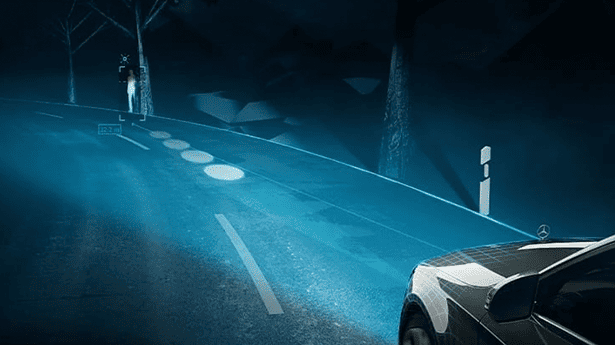
2027 Mercedes-Benz DIGITAL LIGHT headlights can cast ultra-high-definition, glare-free light beams using over 2.6 million pixels of combined resolution while projecting real-time driver assistance graphics directly onto the road surface ahead. Guided by onboard cameras and radar sensors, these headlights dynamically mask oncoming traffic to prevent glare, illuminate pedestrians with targeted spotlights, and project navigational guidelines, low-traction warnings, and stop-sign alerts onto the pavement to enhance nighttime visibility and driving safety.
Beyond traditional high-beam illumination, this light projection architecture functions as an active component of the vehicle's advanced driver assistance systems. By continuously calculating road topography, vehicle speed, and surrounding traffic fifty times per second, the headlamps adapt their beam shape to suit highway driving, urban intersections, and adverse weather conditions. When navigating unlit stretches near local horse farms or dark suburban corridors outside downtown Lexington, the system casts an exceptionally wide light pattern that reveals road shoulders, wildlife, and road hazards far earlier than conventional lighting.
The technology transforms how vehicles interact with night driving environments by bringing critical safety alerts directly into the driver's forward field of view. Instead of forcing the driver to look away at an instrument cluster, visual prompts—such as lane-width guide markers in narrow construction zones or a high-contrast stop symbol when approaching an intersection—appear on the road surface. Experience this groundbreaking illumination system firsthand by visiting our showroom location on Richmond Road or contacting our team directly at (859) 268-1150 to speak with a technology specialist.
How Does Mercedes-Benz DIGITAL LIGHT Work and How Does It Compare to MULTIBEAM LED?
Mercedes-Benz DIGITAL LIGHT works by refracting high-power LED illumination through a micro-mirror chip containing over 1.3 million micro-mirrors per headlight, achieving a massive leap in resolution over MULTIBEAM LED systems. While standard MULTIBEAM LED headlamps rely on 84 individually controlled LEDs per light unit, DIGITAL LIGHT operates with over 2.6 million micro-mirrors across the vehicle to continuously shape, divide, and project light beams with microscopic precision.
At the core of each headlamp module is a Digital Micromirror Device (DMD) chip. Powerful LED arrays emit light onto this micro-mirror matrix, where electronic actuators tilt the micro-mirrors thousands of times per second. By individually controlling the angle of each mirror, the headlight control unit can dim or brighten specific beam segments down to a fraction of a degree. This precise control allows the system to maintain maximum high-beam distance across dark asphalt while carving out precise, dark zones around oncoming vehicles or preceding traffic to avoid blinding other motorists.
Comparing the two systems highlights how automotive lighting has evolved from simple illumination to high-resolution display tech. While MULTIBEAM LED provides excellent beam-shaping capabilities for general night driving, DIGITAL LIGHT introduces HD-quality projection that turns the pavement into an interactive safety display. Drivers exploring our selection of pre-owned luxury sedans often appreciate how this leap in lighting hardware enhances confidence during late-night highway travel.
How Does DIGITAL LIGHT Project Symbols, Pedestrian Warnings, and Traffic Stop Alerts?
DIGITAL LIGHT alerts drivers to stop signs and red lights by projecting a visual warning symbol directly onto the pavement ahead if sensor algorithms detect an imminent risk of passing a traffic control signal. The system also projects pedestrian spotlights, directional pointers, lane-width guide lines for narrow construction zones, and low-traction warnings when slippery road surfaces are detected.
When the vehicle's forward-facing stereo cameras and radar units identify a pedestrian on a dark road shoulder, the system briefly shines a spotlight on the individual to make them clearly visible to the driver. Simultaneously, a directional arrow indicator can be projected onto the road surface pointing toward the pedestrian's position, helping the driver anticipate potential movement. If sensors register sub-zero temperatures or loss of traction, a snowflake graphic appears on the lane ahead as a prompt to adjust vehicle speed.
- Stop Sign & Red Light Alerts: Visual warning icons cast onto the asphalt when the vehicle approaches an active stop signal at speeds suggesting a potential missed stop.
- Pedestrian Spotlighting: Targeted beam highlighting that illuminates pedestrians near the roadway without shining light directly into their eyes.
- Lane Keeping & Construction Guides: Twin light rays projected onto the road that mirror the width of the vehicle, assisting drivers in navigating narrow lanes or roadwork zones.
- Symbol Clarity: High-contrast graphic output engineered to remain legible across varied road surfaces and pavement textures.
When buyers evaluate luxury sedans during evening test drives, they frequently ask whether road projections remain visible on wet or dark pavement before inquiring about optional packages. The micro-mirror projection system utilizes high-intensity LED light sources calibrated specifically to maintain visual contrast against wet asphalt, concrete, and painted road lines. You can browse our certified pre-owned Mercedes-Benz luxury vehicles to find models equipped with driver-assistance technology packages.
Is DIGITAL LIGHT Fully Automatic and What Happens When Sensors Are Obstructed?
Mercedes-Benz DIGITAL LIGHT operates as a fully automatic lighting system that dynamically adjusts beam distribution without requiring manual driver control during night driving. If onboard cameras or radar sensors become obstructed by heavy snow, road grime, or mud, the system safely falls back to standard adaptive LED illumination while temporarily pausing pavement projections until clear sensor input is restored.
In daily operation, drivers can set the lighting system to automatic mode and allow Adaptive Highbeam Assist Plus to manage beam intensity, masking, and symbol projection. The system reads ambient light levels, street lighting, speed, and surrounding vehicle positions to determine the optimal light distribution. If a driver prefers manual operation or wants to customize specific projection preferences—such as turning off lane-guide lines—options can be adjusted through the MBUX infotainment system display.
During winter drives along US 27 between Nicholasville and surrounding suburban routes, slush and road salt can collect on the windshield camera module or front bumper radar. When sensor visual clarity drops below operating thresholds, a driver message indicates that projection functions are temporarily limited. Standard LED high and low beams continue to function normally, preserving primary road illumination until the sensor glass is wiped clear. To prepare your current vehicle for an upgrade to a new model featuring advanced safety technology, evaluate your car's market value with our online trade-in appraisal form.
Frequently Asked Questions About Mercedes-Benz DIGITAL LIGHT Technology
Q: What is the total pixel resolution provided across both DIGITAL LIGHT headlights?
At James Motor Company Mercedes-Benz, customers can explore the cutting-edge DIGITAL LIGHT system that integrates over 2.6 million pixels to enhance nighttime visibility.
Q: How does DIGITAL LIGHT adapt beam shape when driving in city traffic?
In urban environments, the control unit adjusts beam geometry at lower speeds to widen light distribution across sidewalks, crosswalks, and side streets, helping drivers spot pedestrians and cyclists sooner while preventing light glare on shop windows.
Q: Can driver assistance symbols projected onto the road be turned off in vehicle settings?
Yes, drivers can toggle individual projection features—including lane guide lines, hazard symbols, and stop sign warnings—on or off through the lighting menu inside the MBUX infotainment system without disabling automatic high beams.
Q: Are pavement symbol projections legally enabled in all geographic areas?
Symbol projections function based on local motor vehicle safety regulations and GPS location data, automatically enabling graphic projections where approved while maintaining full glare-free adaptive high-beam masking everywhere.
Q: Does DIGITAL LIGHT improve visibility when driving on unlit rural highways?
On dark, unlit roads, the system projects high-beam light over extended distances while continuously creating moving dark zones around preceding and oncoming vehicles, allowing full high-beam brightness across surrounding lanes.
Prices and MSRP referenced in this article are estimates for informational purposes only and do not constitute an offer to sell. See dealer for complete details. Fuel economy estimates shown may differ from official EPA ratings and should not be relied upon as a guarantee of actual vehicle performance.
 AdChoices